
Key Takeaways
- Deferred compensation plans lower current taxable income by postponing salary and bonus payments until retirement, when taxes may be lower.
- Qualified and nonqualified plans differ in protection and limits, with 401(k)s offering ERISA protection and nonqualified plans allowing unlimited but unsecured deferrals.
- Deferral elections must be made before income is earned, often requiring salary decisions by year-end and bonus elections a full year in advance.
- Distribution timing directly impacts retirement taxes, with lump sums vs. installment payouts affecting your future tax bracket.
A deferred compensation plan allows employees to postpone receiving a portion of their income until retirement or another specified date, reducing their current tax burden while building future financial security. These arrangements let workers defer salary, bonuses, or other earnings into a separate account that grows tax-free until withdrawal.
Unlike qualified plans such as 401(k)s with strict contribution limits and IRS regulations, deferred compensation plans offer more flexibility for high earners. Companies use these plans to attract and retain top talent, especially executives who have already maxed out their traditional retirement contributions.
How Deferred Compensation Plans Work
With a deferred compensation plan, employees elect how much of their salary or bonus to defer during designated enrollment periods, with some plans allowing deferrals of up to 100% of bonuses. Deferred amounts are deducted from paychecks before taxes, immediately reducing taxable income. Employees pay taxes when they actually receive the money—potentially years later, when they may be in a lower tax bracket.
Timing matters. Employees typically make deferral elections before they earn the income: by December for the following year's salary, and sometimes a full year in advance for bonuses. They also specify when they want distributions—upon separation from service, at a specific age, or on a predetermined date. Once elections are made, they're often irrevocable for that plan year.
Note that Social Security and Medicare taxes still apply to deferred amounts when earned, not when distributed.
Qualified Plans vs. Nonqualified Plans
Qualified Plans
Qualified plans like 401(k)s and 457(b)s follow strict IRS rules but offer solid protections. Your money sits in a trust separate from your employer's assets through ERISA protection, so even if the company goes bankrupt, your retirement savings stay safe. These plans are available to all eligible employees, making them a cornerstone of most companies' retirement benefits.
Nonqualified Plans for Executives
Nonqualified deferred compensation plans break free from IRS contribution limits, letting executives defer substantial amounts of income. Companies can customize vesting schedules, payout options, and investment choices to match retention goals. The trade-off is risk—these plans aren't protected by ERISA, so your deferred compensation becomes an unsecured promise from your employer.
Investment Options and Tax Benefits
Most plans offer diversified investment options ranging from conservative bond funds to aggressive growth portfolios, including target-date funds that automatically adjust as you approach retirement. Many employers provide access to professionally managed portfolios or robo-advisor services that rebalance investments automatically.
Every dollar you defer reduces your taxable income for that year. If you're earning $300,000 and defer $50,000, you'll only pay income tax on $250,000. This immediate tax reduction is substantial for those in high tax brackets. The tax savings compound when you consider state taxes—if you plan to retire to a state with no income tax, deferring income while working in a high-tax state could result in significant savings.
Keep in mind that Social Security and Medicare taxes still apply to deferred amounts when earned, not when distributed.
Enrollment and Distribution Rules
Eligibility varies by company but is generally offered to executives and highly compensated employees. Employers determine exact criteria, which might include job level, tenure, or base salary minimums. Government and tax-exempt organizations operating 457(b) plans can offer them more broadly.
When you start receiving distributions, that income becomes taxable at ordinary income rates. Some participants choose lump sum payouts, while others prefer installments spread over several years to manage their tax bracket. Most plans require you to make your distribution election when you first defer the compensation. Unlike qualified plans, deferred compensation plans don't have required minimum distributions at age 73.
Building a Competitive Deferred Compensation Strategy
The most successful compensation strategies balance both plan types, using protected 401(k) assets as the retirement foundation while leveraging deferred compensation for additional tax-deferred growth.
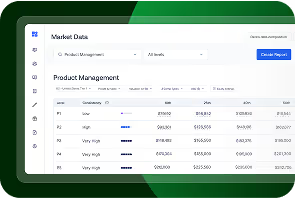
For organizations benchmarking total rewards and communicating the full value of compensation packages to employees, Pave's compensation platform draws on real-time data from 8,700+ companies to help teams benchmark pay, build competitive ranges, and communicate total rewards clearly—including long-term incentives and equity.
Request a demo to optimize your compensation strategy.

Pave is a world-class team committed to unlocking a labor market built on trust. Our mission is to build confidence in every compensation decision.
Frequently Asked Questions
What exactly is a deferred compensation plan?
A deferred compensation plan is an arrangement where employees receive a portion of their pay at a later date, typically in retirement, allowing them to defer income taxes until payout. These plans include qualified options like 401(k)s and nonqualified plans designed for executives with higher contribution limits and more flexibility.
What are the disadvantages of a deferred compensation plan?
The main disadvantages are creditor risk (funds could be lost if the employer goes bankrupt), lack of liquidity (money is locked up until the designated distribution date), and the absence of ERISA protections. The "golden handcuffs" effect can also make it difficult to change employers without forfeiting unvested deferred amounts.
What is the difference between a 401(k) and a deferred comp plan?
A 401(k) offers broad employee access with ERISA protections and annual contribution limits ($24,500 in 2026), while deferred compensation plans provide unlimited savings potential but carry risk as funds aren't legally separated from the company. Deferred compensation plans are typically reserved for highly compensated employees and executives.
Can you cash out a deferred compensation plan?
You can withdraw from a deferred compensation plan, typically only under specific circumstances like separation from employment, retirement, or an unforeseeable emergency. Withdrawals are taxed as ordinary income but without the 10% early withdrawal penalty that applies to 401(k)s before age 59½.