
Equity plan design is a top priority for compensation leaders in 2026—and for good reason. Equity can be a powerful strategic lever for attracting, motivating, and retaining top talent.
But equity strategies are evolving, so Pave partnered with Infinite Equity to analyze real-time equity data from 4M grants to help business leaders navigate today’s competitive market.
Here are three of the top trends shaping equity programs today.
Download the full report to dive deeper into all the equity data and insights.
Trend 1: Public Companies Are Shortening Their Vesting Schedules
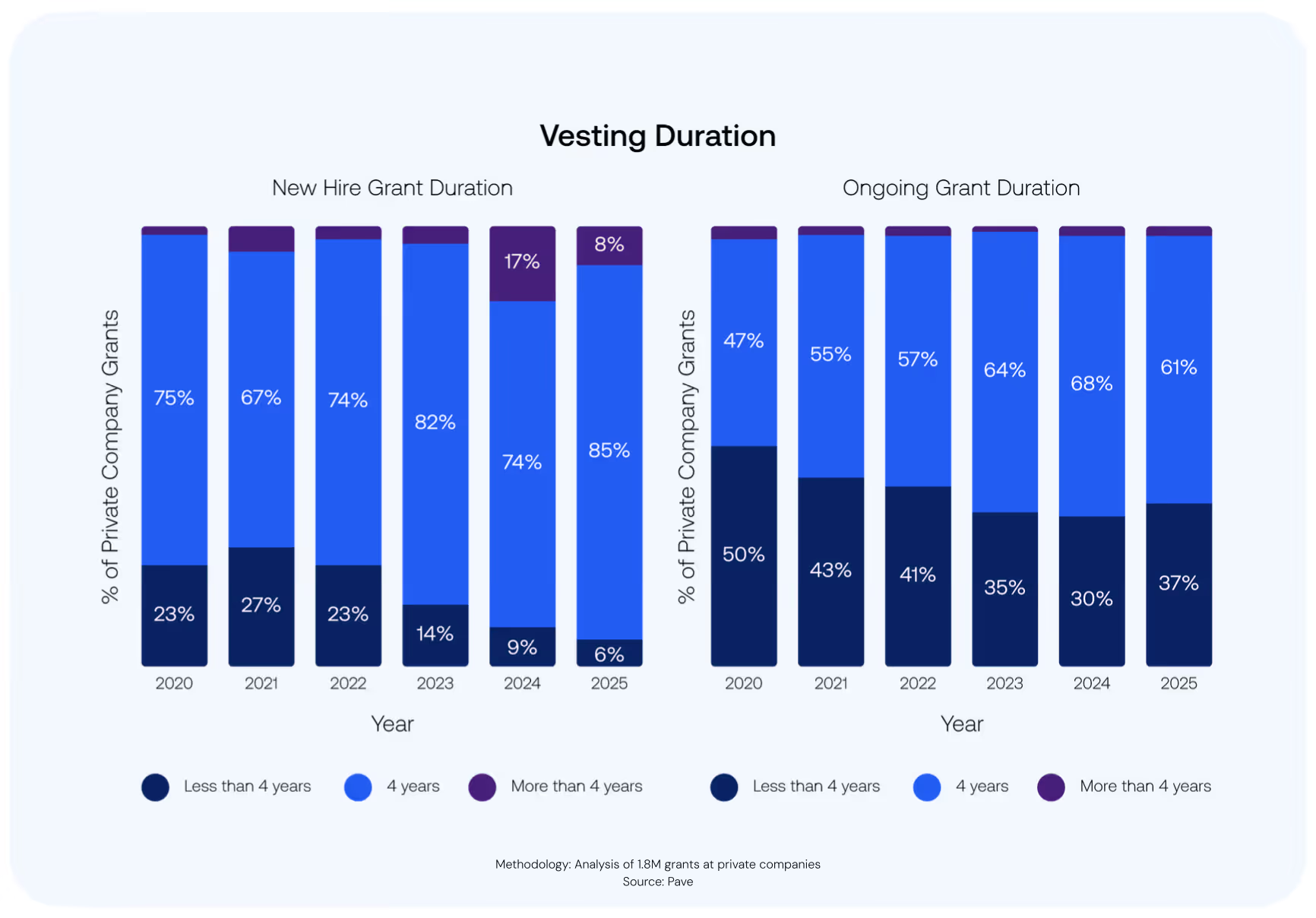
Since 2020, the four-year vesting schedule has been the norm at private companies.
This is especially true for new hire grants. In 2025, 85% of new hire grants at private companies were on a four-year schedule, up from 74% in 2024. Ongoing equity grants tend to have more variance, but four years is still the standard.
On the other hand, in 2024, many public companies started deviating from the traditional four-year vesting schedule.
In 2025, 70% of new hire grants and 61% of ongoing grants at public companies had vesting durations of less than four years. Some companies are unlocking strategic value in shorter vesting periods, like the team at Upstart who recently moved from boxcar grants to one-year equity grants.
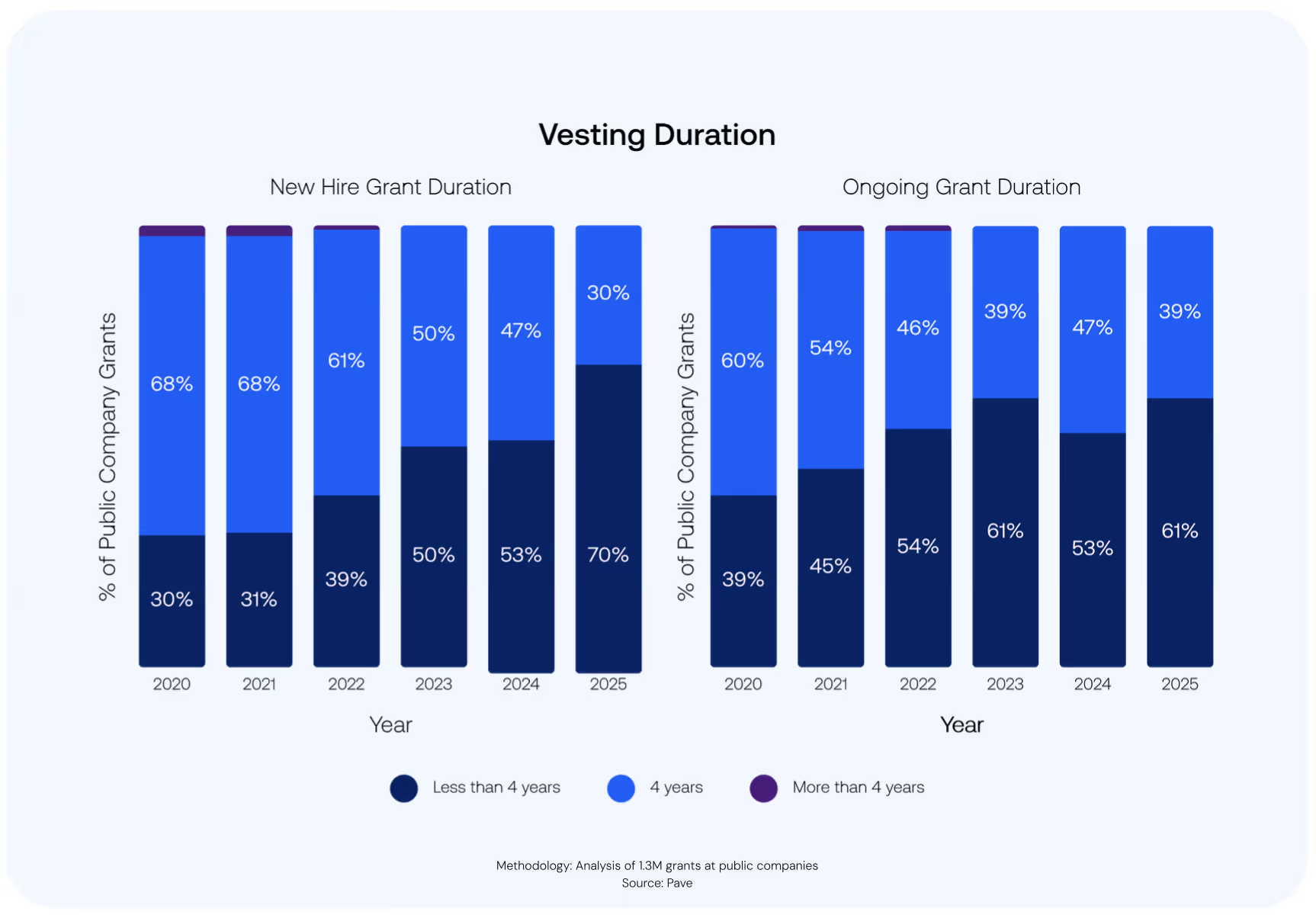
This shift is likely driven by increased scrutiny of stock-based compensation, coupled with a need for greater flexibility.
But vesting schedule changes don’t happen in a vacuum. One adjustment in equity design has a ripple effect, impacting other elements like grant size and frequency. We’ll continue to monitor how companies are rebalancing these interconnected elements over time.
{{mid-cta}}
Trend 2: Equity Is Being Used as a Strategic Lever
Companies are allocating new hire and refresh equity grants strategically within their total rewards programs.
Today, awards are often based on seniority, function, and performance rating:
- Seniority: Equity plays a critical role in executive compensation packages in a competitive market. About 82% of director-level employees receive refresh equity grants, compared with only 25% of P1 employees.
- Function: Equity tends to be disproportionately awarded to high-impact roles like R&D. Among P1 and P2 hires, 84% of R&D employees received equity compared with just 49% in G&A.
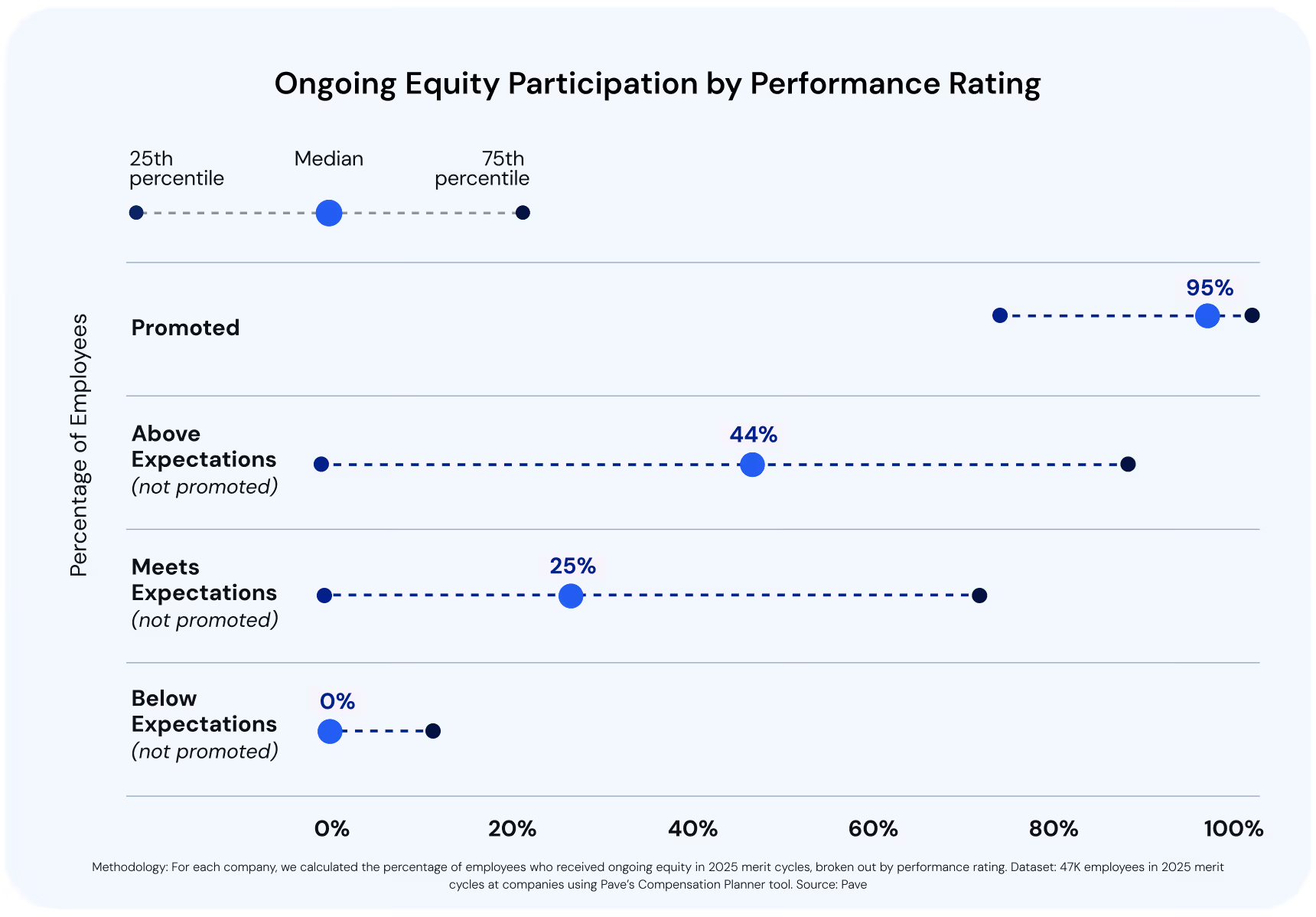
- Performance: Promotions are the strongest driver of ongoing equity grants. A median of 95% of promoted employees receive grants compared with 44% of high performers who aren’t promoted.
Trend 3: As Companies Scale, Burn Rate Increases
While they may seem alarming, high burn rates aren’t necessarily problematic. Context matters—in many cases, they signal growth. Companies that are scaling rapidly tend to have higher burn rates as they compete for new hires and top talent.
Pave's data shows that companies growing headcount by more than 10% have median total burn rates of 2.9%, compared with 2.6% for flat headcount and 2.3% for companies shrinking by more than 10%.

And industry niche plays a role, too. AI-native tech companies tend to have higher burn rates, around 3.9%, reflecting the competition and increased demand for AI and ML talent.
Our advice?
Align your burn rate with your talent strategy. Analyze burn rates over multiple periods—to capture trends and seasonality—and compare values against companies with similar sizes and stages.
Build a More Strategic Equity Strategy
If you’re rethinking your equity program design, you’re not alone.
Companies across Pave's dataset are adopting new vesting schedules, allocating equity grants strategically to top and senior performers, and managing equity burn rates as they scale.
While there isn’t a one-size-fits-all approach, relevant benchmarks can help you identify how your program stacks up—and where to make adjustments.
To learn more about the top equity trends in 2026, get your copy of the report.

Pave is a world-class team committed to unlocking a labor market built on trust. Our mission is to build confidence in every compensation decision.
.avif)