.avif)
Key Takeaways
- NQDC plans create competitive differentiation where standard benefits can't.
- Strategic vesting schedules turn NQDC into retention powerhouses.
- Performance-based NQDC contributions reinforce your pay-for-performance philosophy.
- Real-time benchmarking makes NQDC competitive and defensible.
- Section 409A compliance is non-negotiable.
- Total rewards communication determines NQDC success.
As compensation budgets tighten and the competition for executive talent intensifies, more companies are turning to non-qualified deferred compensation (NQDC) plans to differentiate their offers. But designing these plans can be complex—how much should executives be able to defer? What vesting schedules actually drive retention? How do you communicate value without overwhelming participants?
To help you navigate these decisions, let’s explore how companies are structuring NQDC plans today.
What is a non-qualified deferred compensation plan?
A non-qualified deferred compensation plan allows select employees, typically executives and highly compensated individuals, to defer portions of their salary or bonuses to future dates, usually retirement.
Unlike 401(k)s, which carry an annual IRS contribution limit of $24,500 in 2026, NQDC plans have no IRS-imposed caps. This means your VP of Engineering, earning $400,000, can defer an additional $100,000+ annually beyond her 401(k), letting that money grow tax-free until retirement, when she may face lower tax rates.
The mechanics, as defined under Section 409A of the Internal Revenue Code, work like this: employees don't pay federal income tax on deferred amounts until they receive the money. Your organization, in turn, takes a tax deduction when the payment is made. The deferred funds remain part of your company's general assets rather than sitting in a protected trust as 401(k) funds do, which makes participants unsecured creditors. That risk requires transparent communication during enrollment.
How NQDC Plans Work in Your Compensation Strategy
When you're building offers for senior hires or designing retention packages, NQDC can create meaningful differentiation. Here's a real-world example: your base salary of $350,000 might match a competitor's offer, but an NQDC plan allowing 75% bonus deferrals represents $500,000+ in tax-deferred savings over five years that they can't match.
Setting Up Effective NQDC Programs
Most companies run annual enrollment windows where participants make irrevocable elections about deferral amounts and distribution timing. Using compensation planning software, you can model different scenarios and communicate value through Total Rewards Portals that show executives how deferred comp integrates with their cash and equity packages.
Your plan design choices typically include:
- Investment options: Some companies mirror their 401(k) menu, while others provide fixed crediting rates benchmarked to corporate bond yields
- Deferral limits: Common approaches allow up to 75% of base salary and 100% of bonuses
- Distribution timing: Participants lock this in at enrollment—options include separation from service, specific age, or predetermined date
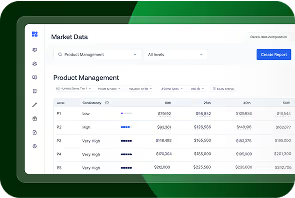
The key is benchmarking your approach against industry standards using real-time market data to ensure your NQDC offerings remain competitive.
How NQDC Differs from 401(k) Plans
The biggest operational difference? You can offer NQDC exclusively to your executive team without the non-discrimination testing required for 401(k)s. You don't need to worry about participation rates across your broader workforce.
There's also a significant security difference in communicating clearly: 401(k) assets sit in protected trusts, while NQDC funds remain unsecured promises to pay. Executives can't roll NQDC money into IRAs, can't take loans against it, and distribution timing gets locked at enrollment. This is why it's important to address your company's financial health directly when promoting these programs.
Strategic Design for Executive Retention
The real value of NQDC comes from a strategic design that aligns executive interests with your organizational goals. Let's explore how companies are structuring vesting schedules and performance-based contributions.
Vesting Schedules That Drive Retention
Vesting provisions can transform NQDC from a nice-to-have benefit into serious retention leverage. Common approaches include:
- Five-year vesting: Employer contributions vest over five years, with accelerated vesting at retirement age (typically 65)
- Cliff vesting: Benefits become 100% vested after three years
- Coordinated schedules: Align NQDC vesting with equity refresh cycles and promotion timelines
When you're modeling vesting scenarios, consider how they interact with your promotion cycles. An executive receiving both NQDC and equity grants on staggered vesting schedules has continuous reasons to stay—exactly the retention dynamic you're trying to create.
Performance-Based Contributions
Some companies are taking NQDC a step further by linking benefits to performance metrics:
- Enhanced crediting rates: Offer higher returns on deferred balances when EBITDA targets are met
- Performance-based contributions: Provide additional employer contributions based on stock price appreciation or revenue growth
- Tiered matching: Increase match percentages for executives exceeding specific performance goals
Benchmarking your NQDC offerings
Many companies keep their NQDC recordkeeper for compliance while connecting compensation intelligence platforms to unify real-time benchmarks and surface NQDC details alongside cash and equity.
Tax Planning and Implementation
NQDC plans are governed by Section 409A of the Internal Revenue Code, which sets requirements around deferral elections, distribution timing, and plan administration. Your benefits administrator and legal counsel should be involved in plan design from the start. For tax planning considerations specific to your executives' situations, direct participants to qualified tax advisors.
Total Rewards Communication
When you're preparing executive compensation recommendations for your board or CEO, show total compensation, including:
- Base salary and target bonus
- Equity grants and existing unvested equity value
- NQDC employer contributions and accumulated balance
- Benefits value (the Total Rewards Report shows median benefits costs of $31,391 annually)
According to Pave and Newfront's Total Rewards Report, the median fully-loaded cost per employee at companies with 1,000+ employees is $268,239+, including cash, equity, benefits, and statutory costs.
For executives you're compensating at multiples of this median, NQDC becomes essential for competitive positioning, but only when you clearly communicate that value.
Modern compensation planning platforms let you surface NQDC alongside cash and equity in Total Rewards Portals, eliminating the complexity that historically plagued NQDC communication.
Building NQDC Into Your Compensation Intelligence
Non-qualified deferred compensation plans give you powerful tools for executive retention and competitive differentiation. The companies seeing the strongest results design strategically using real-time benchmarking data, create vesting schedules that complement equity programs and promotion cycles, and communicate transparently about both benefits and risks.
But NQDC is only one part of a comprehensive executive compensation strategy. Do you know what your peers are planning when it comes to executive retention and performance-based pay?
Participate in compensation surveys and gain access to complete results on key considerations, including executive compensation trends, merit cycle best practices, performance-based pay structures, and equity refresh guidelines. Join Pave Data Lab today to get the data that helps you make more informed compensation decisions.
When you're ready to build NQDC into your broader strategy, explore how Pave brings compensation intelligence, workflow automation, and total rewards communication together in one place.

Pave is a world-class team committed to unlocking a labor market built on trust. Our mission is to build confidence in every compensation decision.
Frequently Asked Questions
What is a non-qualified deferred compensation plan?
An NQDC plan lets you offer select employees the ability to defer compensation to future dates, typically retirement. Unlike 401(k)s with IRS contribution limits ($24,500 in 2026), NQDC plans offer unlimited deferral potential—but deferred funds remain unsecured company assets. Compensation platforms help you structure these plans using real-time benchmarking data while ensuring Section 409A compliance.
What makes NQDC plans valuable for executive retention?
NQDC plans let you offer executives the ability to defer significant compensation beyond qualified plan limits. For a VP earning $400,000 who's maxed out her 401(k), you can design an NQDC plan allowing an additional $100,000+ in annual deferrals. Combined with strategic vesting schedules that align with equity refresh cycles, NQDC creates continuous retention incentives.
What is the contribution limit for NQDC plans?
Unlike 401(k)s with annual IRS limits, you set NQDC limits based on your compensation philosophy and competitive benchmarking. Companies commonly allow up to 75% of base salary and 100% of bonuses. Use real-time data from industry peers to ensure your limits remain competitive.
What happens to NQDC when an executive leaves?
Structure your plan so that executives forfeit unvested NQDC amounts if they leave before vesting—creating retention incentives. Vested funds are distributed according to the predetermined schedule that executives established at enrollment. This irrevocable distribution timing is why clear communication about separation scenarios matters during enrollment.
How should organizations structure NQDC for maximum retention value?
Design vesting periods (typically 3-5 years) that complement your equity refresh cycles, use performance-based matching that reinforces your pay-for-performance philosophy, and integrate NQDC visibility into Total Rewards Portals. According to Pave's analysis of 189 companies, organizations award promoted employees a median 9.9% raises versus 3.8% for non-promoted employees—consider applying similar differentiation to your NQDC matching.
.avif)