.avif)
Key Takeaways
- A retention bonus is most effective during defined, high-risk periods where losing key employees would disrupt business continuity.
- Retention bonuses deliver ROI when their cost is significantly lower than the full expense of replacing critical talent.
- Retention bonuses should complement, not replace, fair compensation, strong management, and career growth.
- Clear agreements, consistent eligibility criteria, and outcome tracking are essential to avoid equity and culture issues.
- Platforms like Pave help teams identify retention risk early and model smarter, market-aligned bonus decisions.
A retention bonus is a financial incentive designed to keep key employees with the company during critical business periods. Organizations use retention bonuses to prevent attrition when losing an employee would disrupt operations, delay projects, or weaken competitive positioning. But timing matters as much as the bonus amount itself.
The challenge is knowing when a retention bonus delivers real value versus when it becomes a costly stopgap measure for deeper retention issues. The most effective retention incentive strategies are proactive, data-driven, and tied to measurable business outcomes.
Understanding when—and how—to structure a retention bonus agreement can mean the difference between retaining top talent through transformation and watching valuable employees leave at the worst possible moment.
What Is a Retention Bonus and Why Does It Matter
A retention bonus is a financial incentive paid to encourage an employee to stay with the company for a defined retention period—typically during organizational change, critical project phases, or periods of heightened attrition risk. Unlike base pay adjustments or equity grants, a retention bonus is typically paid as a lump sum or milestone-based payment tied to a specific commitment timeframe.
These retention payments differ from standard employee benefits or performance bonuses because they address time-bound risk. When business continuity depends on specific individuals remaining in their roles, retention bonuses work as strategic tools to bridge vulnerable periods.
Common scenarios include:
- Mergers and acquisitions where institutional knowledge is critical
- Leadership transitions requiring organizational stability
- Major transformation initiatives like system implementations or product launches
- Competitive talent markets where high-demand roles face poaching pressure
The retention bonus agreement typically outlines the employee's commitment period, payout timing, and conditions for receiving the bonus—creating clear expectations for both the employer and employee to stay aligned through critical periods.
Measuring ROI: Is It Worth It
Evaluating whether to offer a retention bonus requires comparing direct costs against the full expense of replacing an employee. Research from the Society for Human Resource Management (SHRM) shows that replacing an employee typically costs between 50% and 200% of their annual salary, depending on role complexity and seniority.
For a $60,000 employee, replacement costs could range from $30,000 to $120,000 when accounting for:
- Recruiting and advertising expenses
- Interview time and assessment costs
- Onboarding and training investment
- Productivity loss during transition
- Potential project delays or client disruption
A retention bonus of 10-20% of base pay (depending on seniority and market conditions) becomes cost-effective when it prevents turnover among key employees whose departure would trigger these cascading costs.
Key retention success metrics to track:
- Post-payout retention rates – Do employees stay beyond the minimum commitment period?
- Performance stability – Does engagement remain strong during the retention period?
- Business continuity outcomes – Were critical projects completed successfully?
- Employee engagement scores – Did the retention bonus strengthen or damage long-term culture?
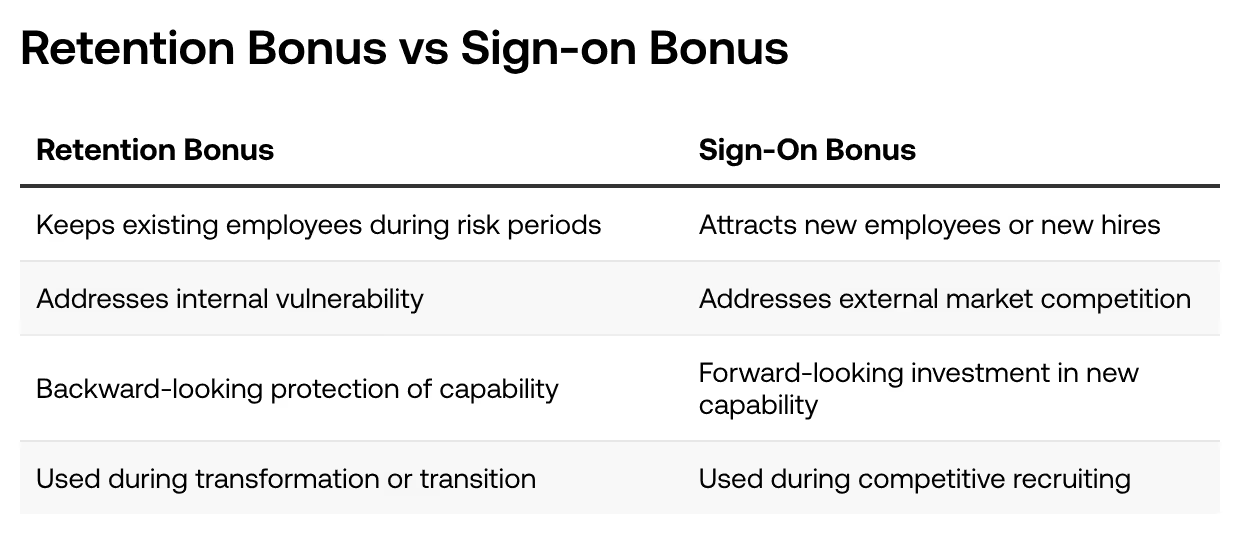
Retention Bonus vs. Sign-On Bonus
While both are supplemental wage incentives, retention bonuses and signing bonuses serve fundamentally different purposes. Understanding this distinction helps organizations deploy each incentive effectively.
How to Calculate and Assess Risk
Determining whether to offer a retention bonus requires evaluating several factors:
- Role criticality – How much business disruption occurs if this person leaves?
- Performance history – Are you retaining excellence or mediocrity?
- Market demand – What external opportunities exist for this employee?
- Timing – Is there a defined period of heightened vulnerability?
Identifying these factors early requires visibility into compensation positioning, performance trends, and market movement—which is where data platforms add the most value. Pave's compensation intelligence platform provides visibility into these signals by combining employee performance tracking, compensation history analysis, and market benchmarking—helping identify flight risk before employees start interviewing elsewhere.
Proactive vs. Reactive Retention Bonuses
The difference between proactive and reactive approaches often determines long-term retention outcomes:
Proactive retention bonuses anticipate risk based on data signals, organizational events, or strategic planning. When employers identify vulnerability early—three to six months before anticipated risk peaks—they can structure retention bonus agreements that feel like recognition rather than desperation. This approach consistently delivers better ROI and stronger retention.
Reactive retention bonuses respond to immediate departure threats, typically as counteroffers after employees receive external offers. While occasionally successful in the short term, they carry significant risks: perceived unfairness among other employees, continued flight risk from the retained employee, and organizational culture shifts toward "threat to leave" as a negotiation tactic.
How Do Retention Bonuses Work
Retention bonuses work by creating a financial incentive for employees to remain for a defined period. The employer and employee enter a retention bonus agreement specifying the bonus amount, commitment period, payout schedule, and conditions.
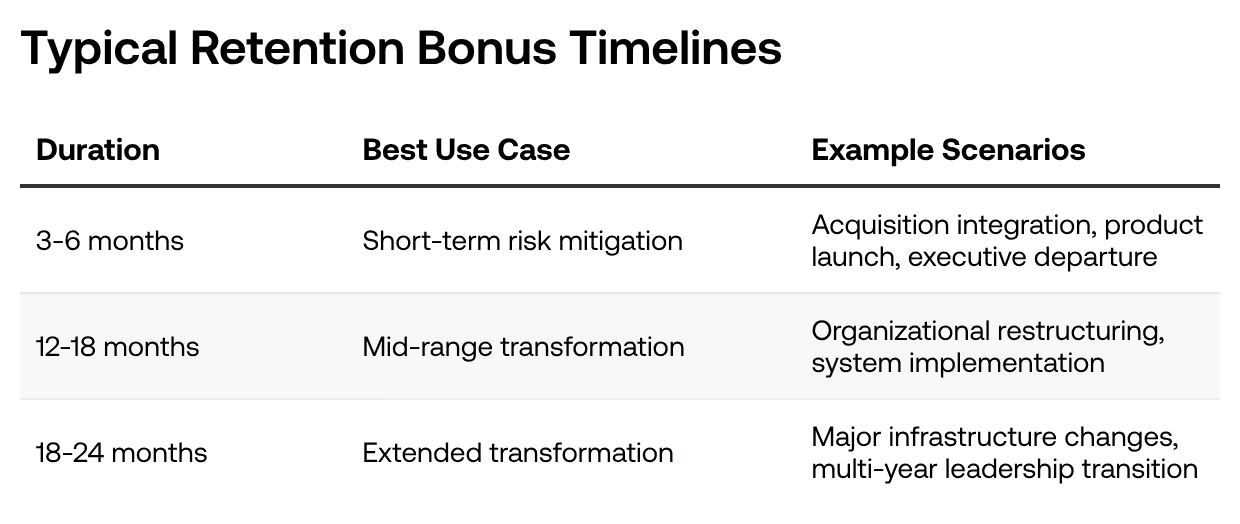
Payout structures vary:
- Lump sum payment after full retention period completion
- Milestone-based (e.g., 50% at 6 months, 50% at 12 months)
- Time-vested schedules releasing portions quarterly
Tax Implications
Employee retention bonuses are classified as supplemental wages by the IRS, with employers typically withholding federal taxes at a flat rate of 22% for bonuses under $1 million (though some employers use the aggregate method, which produces different results). This differs from regular salary taxation and can significantly affect the net payment employees receive.
Employees should understand that the employer withholds tax at this higher rate, plus applicable state and local taxes, meaning the actual take-home amount may be considerably lower than the stated bonus offer.
Common Mistakes to Avoid with Retention Bonuses
Even well-intentioned retention bonus programs can backfire when organizations fall into common traps. Here are the critical mistakes to avoid to ensure your retention investment delivers real results.
- Using retention bonuses as a quick fix for systemic problems
The most damaging mistake is using retention bonuses as substitutes for addressing root retention issues. If employees are leaving due to poor management, limited development opportunities, or compensation significantly below market, retention bonuses create temporary compliance without solving systemic problems. This often leads to employees staying just long enough to receive the bonus, then immediately departing—wasting the investment entirely.
- Creating internal equity problems
Internal equity problems emerge when retention bonus packages vary dramatically among similar employees without a clear rationale, creating resentment among those excluded. Poor communication exacerbates this—offering retention bonuses secretly to some while others discover them through informal channels damages trust across the entire team. Transparency about eligibility criteria and decision-making rationale is essential.
- Overusing retention bonuses
Frequent retention bonuses signal instability, potentially increasing rather than decreasing broader employee turnover as people interpret them as evidence that the organization is struggling.
- Failing to measure outcomes
Organizations that don't track post-retention outcomes—did employees stay beyond the bonus period? Did performance remain strong? Did engagement improve or decline? Repeat expensive mistakes without learning. According to SHRM's research on retention compensation, successful retention strategies require ongoing measurement and refinement based on actual results.
Making Smarter Retention Decisions with Pave
Effective retention bonus strategies require the right data at the right time. Without visibility into employee compensation trends, market benchmarks, and engagement signals, you're making expensive decisions blind.
Pave's compensation intelligence platform provides real-time insights that help you identify flight risk proactively, model retention bonus scenarios, and measure long-term outcomes. By integrating performance data, compensation history, and market intelligence, you can move from reactive counteroffers to strategic retention investments that actually work.
Ready to build a proactive retention strategy? See how Pave helps companies make data-driven retention decisions that reduce turnover and protect your most valuable assets—your people.

Pave is a world-class team committed to unlocking a labor market built on trust. Our mission is to build confidence in every compensation decision.
FAQs About Retention Bonuses
Who is eligible for a retention bonus, and what are the requirements?
Eligibility typically depends on role criticality and performance level. Employers most often offer retention bonuses to key employees whose departure would significantly disrupt operations or require expensive replacement. Requirements include remaining employed in good standing through the retention period and maintaining performance expectations.
When is a retention bonus typically paid, and how is it taxed?
The bonus is typically paid either as a lump sum payment upon completion or through milestone-based installments. Retention bonuses are taxed as supplemental wages, with federal taxes withheld at 22% for bonuses under $1 million, plus state and local taxes. Consult tax professionals for specific implications.
How do you know when to give retention bonuses?
Strong signals include upcoming organizational changes (mergers, leadership transitions), competitive labor market pressure for specific skills, declining employee engagement among high performers, or compensation falling behind market rates. Timing matters more than amount—offering retention bonuses three to six months before anticipated risk delivers better outcomes than reactive offers.